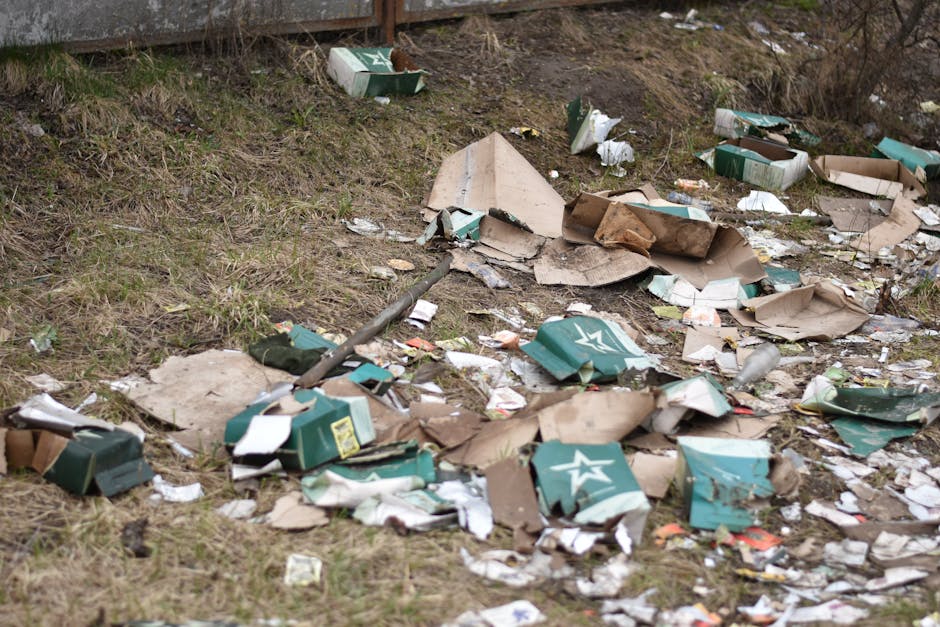
Five rubbish removal myths that could land you in trouble
Rubbish removal looks simple enough from the outside: bag it, move it, get rid of it. Easy, right? Not always. The truth is that a few common rubbish removal myths can cause real headaches, from fly-tipping trouble to missed collections, damaged items, extra costs, or even a fine if waste is handled badly. If you are clearing a flat, sorting out a garden, or dealing with a loft that's become a bit of a family archive, it pays to know what actually matters.
This guide breaks down five rubbish removal myths that could land you in trouble, explains why they persist, and shows you how to avoid the mistakes people make when they are in a rush. You will also find practical steps, a checklist, and guidance on when council collection, private waste removal, or a specialist clearance service makes the most sense.
Table of contents
- Why five rubbish removal myths that could land you in trouble matters
- How rubbish removal actually works
- Key benefits and practical advantages
- Who this is for and when it makes sense
- Step-by-step guidance
- Expert tips for better results
- Common mistakes to avoid
- Tools, resources and recommendations
- Law, compliance, standards, or best practice
- Options, methods, or comparison table
- Case study or real-world example
- Practical checklist
- Conclusion
- Frequently asked questions
Why five rubbish removal myths that could land you in trouble matters
People often treat waste as an afterthought. It is the thing that disappears after the real job is done. But rubbish removal is one of those tasks where the small assumptions can snowball fast. A skipped step here, a wrong bin there, and suddenly you are dealing with an overflowing skip, a council complaint, a missed building deadline, or waste left at the roadside with no clear paperwork.
That is why the myths matter. They shape decisions. And if the decision is wrong, the cost is rarely just financial. It can mean inconvenience, stress, wasted time, and in some cases genuine legal risk. Let's face it, nobody wants to be the person who thought a sofa could simply be "left out back for a bit" and then spends the next week sorting it out.
In our experience, most trouble starts with three things: people underestimate the amount of waste, they misjudge what can be collected, or they assume all removal options work the same way. They do not. A council service, a private rubbish removal team, and a specialist clearance job all solve slightly different problems. Once you see the difference, the myths get much easier to spot.
Expert summary: The biggest rubbish removal mistake is not the waste itself. It is assuming the waste will sort itself out. Good clearance is about planning, sorting, legal disposal, and choosing the right route for the job.
How rubbish removal actually works
At its core, rubbish removal is the process of collecting unwanted items, loading them safely, transporting them, and disposing of or recycling them through appropriate facilities. The details change depending on the load. A single mattress is one job. A full house clearance or builders waste clearance is another entirely.
Here is the practical version. First, the waste is identified. Then it is separated into types where needed: general rubbish, bulky items, recyclable materials, electricals, garden cuttings, white goods, or heavy renovation debris. After that, it is either taken by a licensed waste carrier or handled through a council route, depending on what is being cleared and what access is available.
If you are clearing a home, garage, loft, or office, you will often see a mix of item types all in one pile. That is normal. The issue is not having mixed waste; the issue is pretending it is all the same thing. A fridge, for example, is not handled like old cardboard. A mattress is not the same as rubble. And a business disposal job needs a bit more care than a Friday tidy-up at home. Simple enough, but easy to get wrong.
For larger clearances, people often compare house clearance, property clearance, and rubbish removal. Those services overlap, but they are not identical. Choosing the right one affects how efficiently the job is done and how safely the waste is handled.
The five myths at a glance
- "Anything can be dumped once it's out of sight." Not true. Waste still needs lawful disposal.
- "Council collection and private removal are basically the same." They serve different needs and timelines.
- "All rubbish is fine together." Not for every item type, and sometimes separation saves time and money.
- "If it's on my property, I'm not responsible after that." Responsibility can still follow the waste.
- "Cheapest is always best." Very often, the cheapest option ends up being the most expensive one.
Key benefits and practical advantages
Once you stop believing the myths, the whole process becomes calmer. You make better decisions, and the result is usually cleaner, quicker, and less stressful. That is not flashy, but it matters.
- Fewer delays: You choose the right collection method first time.
- Lower risk: You reduce the chance of illegal dumping or rejected waste.
- Better cost control: You avoid paying twice because a job was under-planned.
- Safer handling: Heavy, awkward, or sharp waste is removed properly.
- More recycling potential: Sorted waste is more likely to be reused or recycled.
- Less disruption: Especially useful in busy homes, shared buildings, or workplaces.
There is also a quieter benefit: peace of mind. A cluttered room can make a whole property feel stuck. A proper clearance puts things back in motion. You can breathe again, which sounds dramatic, but anyone who has stared at a packed garage at 8am on a damp Tuesday probably gets it.
Who this is for and when it makes sense
This topic is relevant to anyone who needs waste removed, but some situations are especially prone to trouble. If you are in one of these groups, the myths are worth unpicking carefully.
- Homeowners and tenants: When clearing old furniture, broken appliances, or post-move clutter.
- Landlords and letting agents: After a tenancy ends, especially if items have been left behind.
- Families handling probate or downsizing: Because sensitive clearances need extra care and time.
- Businesses: Office moves, archived stock, and general commercial waste can get complicated quickly.
- Trades and refurb teams: Builders waste and renovation debris should be handled properly from day one.
- Garden owners: Cuttings, soil, fencing, and broken outdoor items are often heavier and messier than expected.
It makes sense to deal with rubbish removal early if items are blocking access, causing safety issues, or creating pressure around a deadline. For instance, if a property needs to be handed back, cleared for photos, or made ready for contractors, waiting usually makes everything harder.
If you are dealing with a mix of household clutter and heavy items, services like furniture disposal, bulky waste collection, or large item collection may be more appropriate than trying to force everything into a one-size-fits-all plan.
Step-by-step guidance
If you want rubbish removal to go smoothly, a little structure goes a long way. Here is a simple process that works well for most domestic and small business jobs.
- Identify the waste type. Separate general rubbish, bulky items, electricals, garden waste, and anything hazardous or specialist.
- Check what can be reused, donated, or recycled. Not everything needs to be treated as throwaway waste.
- Estimate volume honestly. This is where many people go wrong. A few bags turn into a van load very quickly.
- Look at access. Stairs, narrow hallways, parking restrictions, and lift access all affect the job.
- Choose the right collection route. Compare council collection, private collection, or a specialist clearance service.
- Confirm how the waste will be handled. Ask whether it will be reused, recycled, or taken to an approved facility.
- Prepare the area. Make safe walkways, keep children and pets clear, and keep items you want to retain separate.
- Get clarity before the work starts. A good provider should be able to explain the process in plain English.
That final step matters more than people think. If somebody is vague about what happens next, that is a bit of a warning sign. You do not need a lecture, just a clear answer.
A simple way to think about it
Ask yourself three questions: What is it? How much is there? Where does it need to go? If you can answer those, the job becomes much easier to plan.
Expert tips for better results
These are the habits that save time and frustration.
- Keep a "must keep" zone. Move important items out of the clearance area before anyone arrives.
- Photograph the load in advance. Useful for planning, quoting, and avoiding surprises.
- Break down furniture if it is safe to do so. A flat-packed item is often easier to remove than a bulky assembled one.
- Group similar materials together. Cardboard with cardboard, wood with wood, green waste with green waste.
- Be honest about awkward access. A basement flat or a fourth-floor walk-up changes the job quite a bit.
- Plan for odd items early. Mattresses, fridges, and sofas can need specific handling.
One small but useful tip: if you are clearing a loft, garage, or shed, check for hidden extras behind the obvious clutter. Old paint tins, rusty tools, cracked tiles, and spare cables have a habit of showing up once the top layer is moved. A proper look saves a second trip later.
For homes with a lot of mixed clutter, services such as loft clearance, garage clearance, or home clearance can be a better fit than a basic one-off collection.
Common mistakes to avoid
Here is where the myths usually show up in real life. The mistake is not just believing them. It is acting on them too quickly.
- Leaving waste outside without arranging collection. That can be treated as fly-tipping if it is dumped improperly.
- Assuming all items are accepted by every collection service. They are not.
- Putting mixed waste into the wrong container. This can create refusal, extra charges, or disposal problems.
- Underestimating volume. A pile that looks small in a corner can be deceptively large once loaded.
- Not checking licences or insurance where relevant. If a job goes wrong, that matters a lot.
- Using the cheapest option without reading the small print. Cheap and clear are not always the same thing.
There is also a tendency to think "someone else will sort it." Maybe a site manager, maybe the council, maybe the neighbour who seems organised. Usually, no. Waste needs an owner until it is properly handed over.
The five myths, broken down plainly
| Myth | Why people believe it | What can go wrong | Better approach |
|---|---|---|---|
| Anything can just be dumped | It feels quick and simple | Illegal disposal, complaints, fines, mess | Use a legal collection or disposal route |
| Council and private services are the same | Both remove waste | Missed deadlines, wrong expectations | Match the service to the job size and timing |
| All rubbish can be mixed together | It saves sorting time | Rejected loads, higher disposal costs | Separate special and recyclable items where practical |
| Once it leaves my door, it's not my problem | It seems logical | Responsibility can still follow the waste chain | Choose a reputable carrier and keep records |
| Lowest price means best value | Saving money feels smart | Hidden extras, poor service, repeat work | Compare what is included, not just the headline price |
Tools, resources and recommendations
You do not need a warehouse full of equipment to handle rubbish removal well. A few basic tools and a clear plan usually do the trick.
- Heavy-duty sacks or rubble bags: Better for tough waste than thin household bags.
- Gloves and sturdy footwear: Especially if there are sharp edges, broken glass, or damp items.
- Labels or marker pens: Handy for separating keep, recycle, and remove piles.
- Measuring tape: Useful for large furniture and awkward access points.
- Phone camera: Helps document item condition and estimate volumes.
- Basic trolley or sack truck: Useful for heavier items if the route is clear and safe.
For specialised jobs, the right service matters more than the tools in your shed. For example, furniture removal and collection can help with bigger household items, while builders waste clearance is a better fit for renovation debris. If recycling is a priority, waste recycling and recycling and sustainability are worth considering as part of the decision.
For kitchen and utility-room waste, odd items can crop up too. A broken appliance, for instance, may need fridge disposal or white goods recycle rather than being treated as ordinary rubbish. That distinction sounds small. It is not.
Law, compliance, standards, or best practice
Waste handling in the UK comes with responsibilities, even for ordinary household jobs. You do not need to become a compliance expert, but you should know the basics. If you arrange removal, make sure the person taking the waste is suitable for the job and that disposal is lawful. If you hand waste to the wrong person, it can come back to bite you. Not immediately, perhaps, but still.
Good practice usually includes clear communication, safe loading, suitable transport, and proper disposal or recycling. For businesses, the standard is even stricter because commercial waste often needs more documentation and clearer segregation. Office furniture, electronic waste, and archive clear-outs should be handled with care, especially if confidential items are involved.
Health and safety also plays a part. Heavy lifting, blocked exits, broken glass, mouldy waste, and sharp edges are all avoidable issues if the job is planned properly. You can review a provider's health and safety policy and insurance and safety information if you want extra reassurance before booking.
For council-led disposal, rules can vary by area and by item type. It is sensible to check local expectations rather than assume every municipality treats waste the same way. If you need a simple household route, pages like council waste collection, council rubbish collection, and council large item collection can help you think through the differences.
One more practical point: if you are comparing providers, look for clarity around pricing, what is included, and how waste is handled. The useful question is not "Can you take this?" but "How will you take care of it properly?" That shift in wording tends to tell you a lot.
Options, methods, or comparison table
Here is a straightforward comparison of common rubbish removal routes.
| Option | Best for | Pros | Potential downside |
|---|---|---|---|
| Council collection | Smaller or scheduled household waste | Convenient for certain items, familiar process | May have limits on timing, volume, or item type |
| Private rubbish removal | Faster turnaround, mixed or bulky loads | Flexible, often more hands-off for the customer | Quality and pricing vary, so compare carefully |
| Specialist clearance service | Whole rooms, properties, estates, offices | Better for complex, heavy, or sensitive clearances | May feel like more service than you need for a tiny job |
| Self-haul to a facility | DIY-minded people with suitable access and vehicle | Can be practical for simple loads | Time-consuming, physically demanding, and not ideal for large items |
For many readers, the decision comes down to speed versus effort. If you want minimal disruption and have awkward items, a dedicated service is often the smoother option. If it is a small, straightforward load, a council route may be enough. The trick is matching the method to the job, not forcing the job into the method.
Case study or real-world example
A common situation goes like this. A family clears out a relative's flat after a move. They start with good intentions, pile everything into bags, and think the council collection will sort the rest. Then they discover the load includes an old mattress, a broken chest of drawers, a fridge, and several bags of mixed household waste. The collection rules do not fit the pile, the timeline is tight, and the hallway is already half full. A bit of a mess, frankly.
What usually helps in a case like that is a reset. First, identify the special items. Second, separate what can be recycled or kept. Third, check whether a full flat clearance or probate clearance style service is more suitable than a standard rubbish collection. Once the job is reframed properly, the stress tends to drop very quickly.
Another familiar example is garden waste. People assume branches, turf, old pots, broken fencing, and a few rusted tools are all "just garden stuff." But the load can be heavy, messy, and awkward to move. A service such as garden clearance is often better than trying to improvise with regular waste bags and a weekend plan that was always going to be optimistic.
Practical checklist
Use this before you book or start a rubbish removal job.
- Have I identified every waste type in the load?
- Do I know which items need special handling?
- Have I estimated the volume honestly?
- Is access clear for lifting and loading?
- Do I need council collection, private removal, or a specialist clearance service?
- Have I separated anything I want to keep?
- Do I know how the waste will be disposed of or recycled?
- Have I checked for health and safety concerns?
- Am I clear on the cost basis and what is included?
- Have I kept a record if the waste is commercial or sensitive?
If you can tick most of those off, you are already ahead of the curve. Honestly, a lot ahead.
Get a free quote today and see how much you can save.
Conclusion
Five rubbish removal myths that could land you in trouble usually sound harmless at first. That is the problem. They are tidy little shortcuts in the mind, and shortcuts are tempting when you want waste gone quickly. But rubbish does not stop being your problem just because it has been pushed into a corner, loaded too fast, or handed to the wrong route.
If you remember one thing, make it this: the right rubbish removal choice is about the item, the volume, the access, and the destination. Get those right, and the whole job becomes easier, safer, and more predictable. Get them wrong, and you may find yourself paying for the mistake twice.
Take a breath, check the load properly, and choose the option that fits. A little care now usually saves a great deal of hassle later.
Frequently asked questions
What are the five rubbish removal myths that could land you in trouble?
They are the common false beliefs that any waste can be dumped, all collection services work the same way, mixed rubbish is always fine, responsibility ends once the waste leaves your property, and the cheapest quote is the safest choice.
Can I put all my rubbish in one pile and leave it for collection?
Sometimes yes, but not always. Different items may need different handling, especially electricals, fridges, mattresses, and builders waste. Sorting in advance usually saves time and avoids refusals.
Is council waste collection the same as private rubbish removal?
No. Council services usually suit certain item types and may follow fixed rules or timing. Private removal is often more flexible and better for bulkier or mixed loads.
What happens if rubbish is dumped illegally?
Illegal dumping can create serious problems, including complaints, clean-up costs, and possible enforcement action. It is always better to use a lawful disposal route.
Do I need to separate recyclable waste before removal?
It is often helpful, and sometimes strongly recommended. Separating recyclable materials can make disposal more efficient and may support better environmental outcomes.
How do I know if a rubbish removal company is reputable?
Look for clear pricing, clear explanations of what is included, sensible safety information, and a straightforward approach to disposal. If anything feels vague, ask more questions.
What kind of waste needs specialist handling?
Items such as fridges, mattresses, large furniture, electrical goods, and renovation debris often need more specific handling than general household rubbish.
Is it cheaper to do rubbish removal myself?
Sometimes, for small and simple loads. But once access, loading time, transport, fuel, and disposal fees are added up, self-removal is not always the cheapest or easiest option.
What should I check before booking a clearance?
Check what items you have, how much waste there is, whether access is awkward, and whether anything may need special disposal. A quick photo set can be very useful.
Can rubbish removal help with a house clearance or probate property?
Yes. For bigger or more sensitive jobs, a tailored service such as house clearance or probate clearance is often more suitable than a simple one-off collection.
What is the biggest mistake people make with rubbish removal?
The biggest mistake is guessing. Guessing the volume, guessing the item type, or guessing that "someone will sort it" is usually where trouble begins.
How soon should I arrange removal once I start clearing items?
As soon as the load starts to become awkward, bulky, or time-sensitive. Leaving it until the last minute tends to make the job more stressful, not less.